About Freemasonry
“Masonic labor is purely a labor of love. He who seeks to draw Masonic wages in gold and silver will be disappointed. The wages of a Mason are in the dealings with one another; sympathy begets sympathy, kindness begets kindness, helpfulness begets helpfulness, and these are the wages of a Mason.”
What Is Freemasonry?
Freemasonry is the world's oldest and largest fraternity: a brotherhood of good men who want to become better men. Masons commit to living honorable, principled lives, to supporting one another, and to making their communities stronger. In America, Masons have been part of community life for more than 250 years, and Havasu Lodge No. 64 has been part of Lake Havasu City since 1968.
Freemasonry has often been described as "a system of morality, veiled in allegory and illustrated by symbols." Its lessons come from the old stonemasons and cathedral builders of Europe. Their working tools became symbols of moral truths. The 24-inch gauge reminds a Mason to use his time wisely. The common gavel reminds him to shape himself into a better man, just as the gavel shapes rough stone.
Brotherly Love, Relief, and Truth
Everything a Mason does rests on three great principles. Brotherly Love means treating every person with kindness and respect. Relief means caring for those in need, in our lodge and in our community. Truth means living with honesty and integrity in every part of life. Alongside these, Masons strive to practice the four cardinal virtues: Temperance, Fortitude, Prudence, and Justice.
Life in the Lodge
The word "lodge" comes from the shelters medieval stonemasons built beside the cathedrals they were raising. There they rested, shared meals, and practiced their craft through the winter. Today a lodge is both a place and a family: a close group of men who have made solemn promises to one another.
Every lodge has its own personality, shaped by its members. At Havasu Lodge No. 64 that means monthly stated meetings, degree work, shared dinners, community service, and plenty of good fellowship. Our members come from every generation, faith, background, and walk of life. What we share is a commitment to the same values, and the friendships that grow from that are among the strongest any man will ever know.
The Symbols of Freemasonry
Masons teach through symbols because a symbol speaks quickly and crosses every language barrier.
The Square stands for honor, integrity, and truthfulness, and for how we should treat others: "on the square."
The Compasses stand for self-control and for keeping our passions within due bounds.
The Letter G stands for God, who should be at the center of a Mason's thoughts and actions.
The Apron honors the working stonemasons who came before us. Masons wear it in lodge, at some public ceremonies, and at Masonic funerals.
The Three Degrees
A man becomes a Mason through three ceremonies, called degrees. They are loosely based on the way medieval craftsmen advanced in their trade, and they represent the stages of a man's life: youth, manhood, and age. Each degree teaches moral lessons, and a candidate shows proficiency in one before moving to the next.
Entered Apprentice (First Degree). A man's introduction to Freemasonry. He takes his first obligation, receives the lessons of the degree, and is first called "Brother."
Fellowcraft (Second Degree). Named for the skilled craftsmen of the old guilds. This degree focuses on learning, wisdom, and the pursuit of knowledge.
Master Mason (Third Degree). The completion of the journey and the highest degree in Freemasonry. A Master Mason enjoys the full rights of membership and may visit lodges around the world.
Appendant and Concordant Bodies
The Masonic family is large, and not all of it is for men alone. Once a man is a Master Mason, many other Masonic orders open to him and to his family. Each one uses its own symbols and lessons to build on what he learned in the lodge, and many support major charities. None of them is "higher" than the Master Mason degree; they are ways to keep learning, serving, and enjoying fellowship.
Scottish Rite
Scottish Rite, Southern Jurisdiction: Arizona is part of the Southern Jurisdiction. The Scottish Rite confers the 4th through 32nd degrees, which explore philosophy, history, and ethics in depth.
Scottish Rite, Northern Masonic Jurisdiction: Serves the 15 northeastern states, with the same mission of education, charity, and fellowship.
Knights of St. Andrew: A service group of Scottish Rite Masons who support their Valley and its programs.
York Rite
York Rite: A series of bodies that continue the story begun in the lodge.
Royal Arch Masons: Completes the legend of the Master Mason degree.
Cryptic Masons: The Council degrees, which explain events surrounding the building of King Solomon's Temple.
Knights Templar: A Christian order of Masonic knighthood known for its eye research charities.
Fellowship and Service
Shriners International: Fun, fellowship, and parades with a serious purpose: Shriners Children's hospitals.
Grotto: A social order for Master Masons that supports dental care for children with special needs.
Tall Cedars of Lebanon: A fellowship order that has long supported muscular dystrophy research.
High Twelve: A service club for Masons that supports youth and education.
Invitational Orders
Grand College of Rites: Preserves and publishes historic Masonic rituals.
Royal Order of Scotland: An order with deep Scottish roots, joined by invitation.
Red Cross of Constantine: An invitational order for Christian Masons.
For Women and Families
Order of the Eastern Star (Arizona): Open to Master Masons and their female relatives, focused on charity and fellowship.
General Grand Chapter, Order of the Eastern Star: The international Eastern Star organization.
Order of the Amaranth: Master Masons and their female relatives working together in charity and friendship.
Daughters of the Nile: An organization for women related to Shriners that supports Shriners Children's hospitals.
Masonic Youth
DeMolay International: Leadership and character for young men ages 12 to 21.
Job's Daughters International: Leadership, public speaking, and charity for girls ages 10 to 20 with a Masonic relationship.
Rainbow for Girls: Service, leadership, and lifelong friendships for girls.
Famous Freemasons
John Wayne: An Arizona Mason
John Wayne, born Marion Morrison (1907 to 1979), starred in more than 200 films over a fifty-year career and won the Academy Award for True Grit in 1969. To generations of moviegoers he came to stand for American individualism and the spirit of the West.
The Duke's Masonic story runs through Arizona. He was a member of DeMolay as a high school student in Glendale, California, and like his father before him he became a Freemason. He received his three degrees at Marion McDaniel Lodge No. 56 in Tucson, Arizona: initiated July 9, passed July 10, and raised a Master Mason on July 11, 1970. That same year he received the DeMolay Legion of Honor, and in December 1970 he joined the York Rite bodies in California and became a Shriner at Al Malaikah Shrine Temple.
Courtesy of the Grand Lodge of Arizona.
Other Well-Known Masons
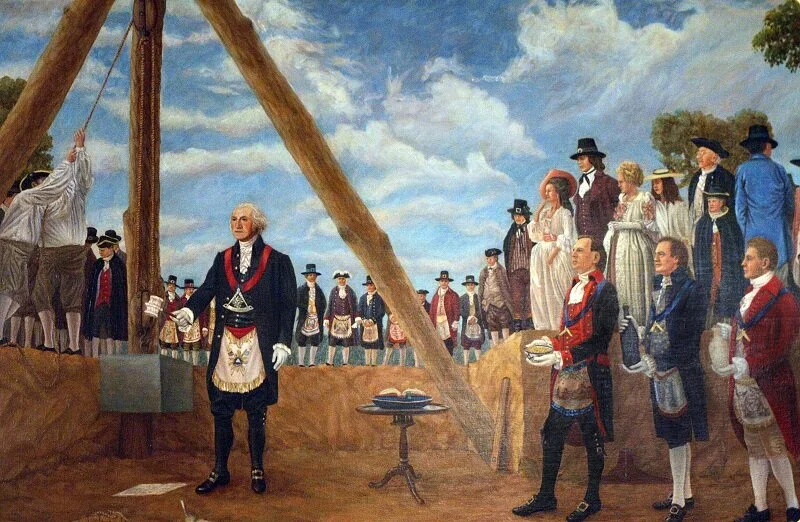
Masons have helped shape American history from the very beginning. A few of the many well-known Brothers include George Washington, Benjamin Franklin, Paul Revere, Mark Twain, Presidents Harry S. Truman and Gerald R. Ford, and astronaut Buzz Aldrin.
Frequently Asked Questions
Who can become a Mason?
Any man of lawful age and good character who believes in a Supreme Being and asks to join of his own free will. Masons come from every nation, faith, race, income, and background.
Is Freemasonry a religion?
No. Freemasonry is not a religion and is not a substitute for one. It asks only that a member believe in a Supreme Being, and it encourages each man to be active in his own faith. Religion and politics are not discussed in lodge.
Is Freemasonry a secret society?
No. Our meetings are held in a well-known building, our members are free to say they are Masons, and our values are published openly. The only private parts are certain traditional modes of recognition and the details of our ceremonies.
How do I join?
Masons do not recruit, so the first step is yours: you have to ask. Reach out to us, get to know our members, and when you are ready, submit a petition. A small committee will meet with you, answer your questions, and the lodge will then vote on your petition.
What does it cost?
There is a one-time fee for the degrees and modest annual dues that support the lodge. Contact us for current amounts.